A man's trousers should break exactly where he wants them to. But you don't need a needle and thread to achieve that. Learning how to hem pants without sewing is a practical skill that saves trips to the tailor and keeps your wardrobe looking sharp. Whether you're shortening a pair of chinos for a new season or adjusting off-the-rack dress pants, these no-sew methods deliver clean results in minutes.
Luxury is not the label. It is the discipline. And part of that discipline is knowing how to make your clothes fit properly without relying on someone else. Hemming without sewing isn't a compromise — it's an alternative for men who value speed and effectiveness.
The Case for a No-Sew Hem
Traditional hemming requires a needle, thread, and some skill. But not every alteration demands that. If you need a temporary fix for a weekend event or a permanent bond for casual trousers, no-sew methods hold up surprisingly well. The key is knowing which method fits the fabric and the occasion.
No-sew hems work best on cotton, wool, and synthetic blends. Avoid them on delicate silks or heavily structured trousers that require a tailor's hand. For everything else, you can achieve a crisp hem that looks intentional, not improvised.
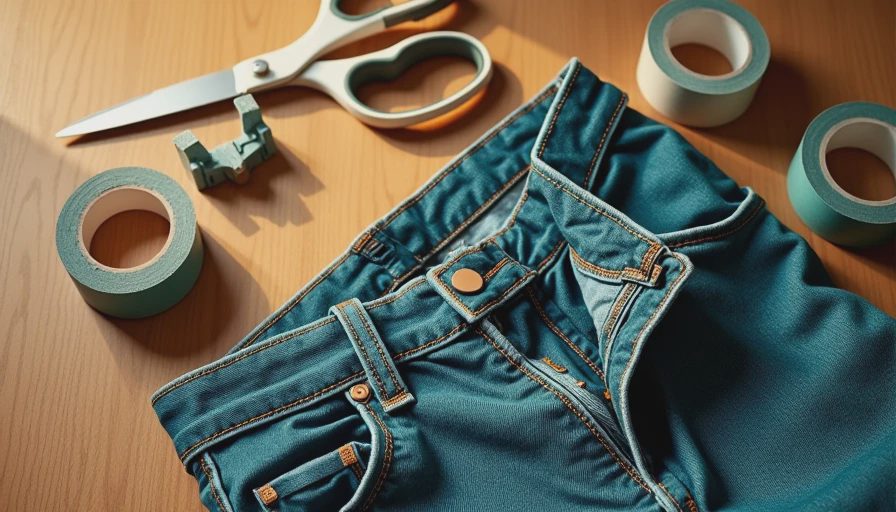
Method One: Hem Tape (Best for a Permanent Bond)
Hem tape, also known as fusible webbing or hemming tape, is the gold standard for no-sew hemming. Brands like Dritz Stitch Witchery or HeatnBond give you a strong, washable bond when applied with a hot iron.
What you need: Hem tape, scissors, iron, measuring tape, pins (optional).
Steps:
- Try on the pants and mark the desired length with a pin or chalk. Fold the excess fabric up to the inside.
- Cut a strip of hem tape the width of the pant leg. Place it inside the fold, between the fabric layers.
- Cover with a pressing cloth (a thin cotton handkerchief works). Press with a hot iron for 10–15 seconds per section. Do not slide — press and lift.
- Let cool for a minute. Check the bond. If it's not fully fused, repeat with pressure.
The result is a flat, secure hem that survives machine washing on gentle cycle. It works on chinos, dress slacks, and even some jeans.
Method Two: Fabric Glue (Best for Quick Fixes)
Fabric glue offers a no-heat alternative. It's ideal for fabrics that can't take high heat or for travel situations where you don't have an iron.
What you need: Fabric glue (Beacon Fabri-Tac or Aleene's), toothpick, scissors, clothespins.
Steps:
- Measure and fold the hem as above.
- Apply a thin bead of glue along the folded edge. Use a toothpick to spread it evenly.
- Press the fabric together and hold for 30 seconds. Clip with clothespins or weight it down.
- Let cure for 24 hours before wearing or washing.
Fabric glue is strong but not as heat-resistant as tape. Use it for trousers you won't launder often, like wool dress pants.
Method Three: Safety Pins (Best for Temporary Adjustments)
When you need a hem for a night out or a photo shoot and don't want any permanent change, safety pins are your friends. This method is zero-commitment and reversible.
What you need: Small safety pins (1 inch or smaller), measuring tape.
Steps:
- Fold the pants to the desired length.
- Insert a safety pin from the inside of the pant leg, catching both layers of the fold. Close the pin securely.
- Space pins every 2–3 inches around the circumference.
- Flatten the hem with your fingers to minimize bulk.
This works best with straight-cut or tapered trousers. Avoid it with very wide leg openings where the pins may show.
Common Mistakes and How to Avoid Them
Even a simple hem can go wrong. The most common errors are measuring while standing (your pants sit differently when you walk) and using too much tape or glue, which creates a stiff, unnatural drape.
Best practices:
- Always try the pants on with the shoes you plan to wear.
- Mark the hem at the front and back — trousers often sit unevenly.
- Test a small section of tape or glue on an inside seam first, especially with delicate fabrics.
- Iron the pants flat before starting. Wrinkles ruin the measurement.
- After fusing, hang the pants overnight to let the bond set fully.
Another mistake: expecting a no-sew hem to look identical to a tailor's stitch. It won't. But it can look clean and intentional if you press firmly and evenly.
When to Hand It to a Professional
No-sew methods have limits. If your trousers are lined, have a delicate silk or linen blend, or require a trouser cuff (turn-up), leave it to a tailor. Similarly, if the hem needs to be taken up more than 2 inches, a no-sew method may create too much bulk inside the leg.
For most chinos, cotton trousers, and casual wool pants, a no-sew hem is a solid solution. It saves you $15–$25 per pair and a trip to the dry cleaner. But if you're altering a $1,000 pair of bespoke trousers, stop reading and call your tailor.
Final Thoughts: Precision Over Perfection
Knowing how to hem pants without sewing gives you control over your wardrobe. It's a quick, reliable technique for maintaining fit between visits to the tailor. A man who can adjust his own trousers is a man who understands that clothing is subordinate to his presence — not the other way around.
Try it on an old pair first. Get the feel for the tape and iron. Once you do, you'll wonder why you ever waited in line for a four-dollar hem.





No notes yet — write the first one.