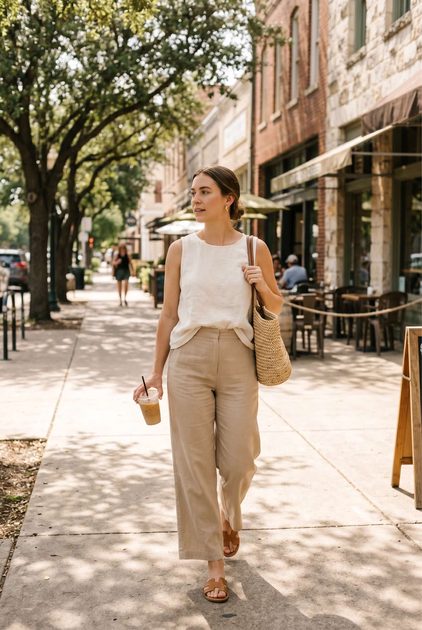
I live in Austin, Texas, where summer means months of temperatures that make you want to wear as little as possible and still feel like you are melting. In my years as a visual merchandiser and e-commerce stylist, I dressed both mannequins and real women for sweltering conditions, and I learned that hot weather is where most wardrobes fall apart. The temptation to throw on anything that breathes often leads to outfits that feel lazy, shapeless, or straight-up sloppy.
But heat does not have to mean giving up on looking like yourself. The solution is a combination of the right fabrics, the right silhouettes, and a few clever styling moves that keep air flowing while keeping you pulled together. Here is exactly how to handle hot days without looking like you surrendered to the temperature.
The Fabric Rule That Changes Everything
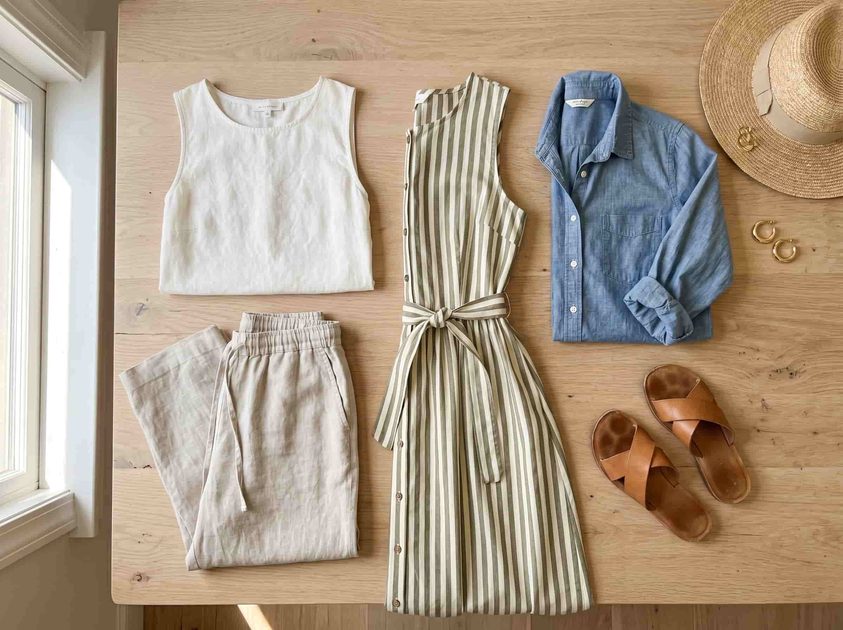
The single most important hot-weather decision you make is fabric. I learned early in my retail career that a garment can look beautiful on a hanger and become unbearable the moment you step outside. The wrong fabric clings, shows sweat, wrinkles in minutes, and makes you feel trapped. The right fabric moves with your body, lets air circulate, and still looks presentable after hours of wear.
Here are the fabrics I reach for on hot days, and the ones I avoid completely.
Wear This | Why It Works | Avoid This | Why It Fails |
|---|---|---|---|
Linen and linen blends | Highly breathable, wicks moisture, looks intentional even with natural wrinkles | Polyester satin or shiny synthetics | Traps heat, shows every drop of moisture, clings unflatteringly |
Lightweight cotton (voile, lawn, mid-weight jersey) | Soft, breathable, absorbs moisture, drapes well without sticking | Cheap stiff polyester crepe | Does not breathe, feels plasticky against the skin |
Chambray | The lightweight, breathable cousin of denim, with texture and structure | Heavy denim or thick twill | Stiff, heavy, and retains heat |
Tencel and lyocell blends | Smooth, breathable, wrinkle-resistant, drapes beautifully | Acrylic knits | Can feel scratchy and trap heat despite being lightweight |
Lightweight crepe (matte finish) | Airy but structured, holds its shape, resists wrinkles reasonably well | Shiny rayon challis | Often clings and looks limp in humidity |
The fabric test I do in stores is simple: hold the garment up and see how much light passes through. A slight translucence often indicates a lighter, more breathable weave. Then hold the fabric against the inside of your wrist. Does it feel cool to the touch, or does it immediately feel warm and sticky? Your wrist is a good indicator of how the rest of your body will respond.
The Silhouettes That Keep Air Moving
Fabric is only half the equation. The shape of the garment determines whether air circulates or gets trapped. I have worn linen pieces that were cut too close to the body and felt stifling, and I have worn strategically loose pieces that acted like personal air conditioning. Here are the silhouettes I rely on.
Wide-Leg Trousers and Relaxed Tapered Pants
Trousers that skim the body rather than grip it allow air to move up and down the legs. High-waisted wide-leg trousers in a linen blend or lightweight cotton look polished and feel like a breeze with every step. Avoid anything with a tight thigh or a skinny cut that wraps around the leg.
Sleeveless Tops with a Defined Shoulder
A sleeveless top that has a clean shoulder line, such as a sleeveless button-down or a knit tank with a finished edge, looks deliberate and feels cool. The exposed arm allows heat to escape. The key is avoiding flimsy spaghetti straps that can read as too casual or lingerie-like unless layered.
A-Line and Shift Dresses
Dresses that hang away from the body rather than wrapping it are the ultimate hot-weather solution. A midi-length A-line dress in cotton or a cotton-linen blend provides full coverage while allowing constant airflow. A shift dress in a lightweight crepe does the same with a slightly more structured look.
Loose Button-Downs Worn Open or Half-Tucked
An oversized cotton or linen button-down, worn open over a simple tank or camisole, adds sun protection and polish without trapping heat. Alternatively, button it up and do a half-tuck into trousers for a put-together look that still breathes.
The Hot-Weather Outfit Formulas I Use All Summer
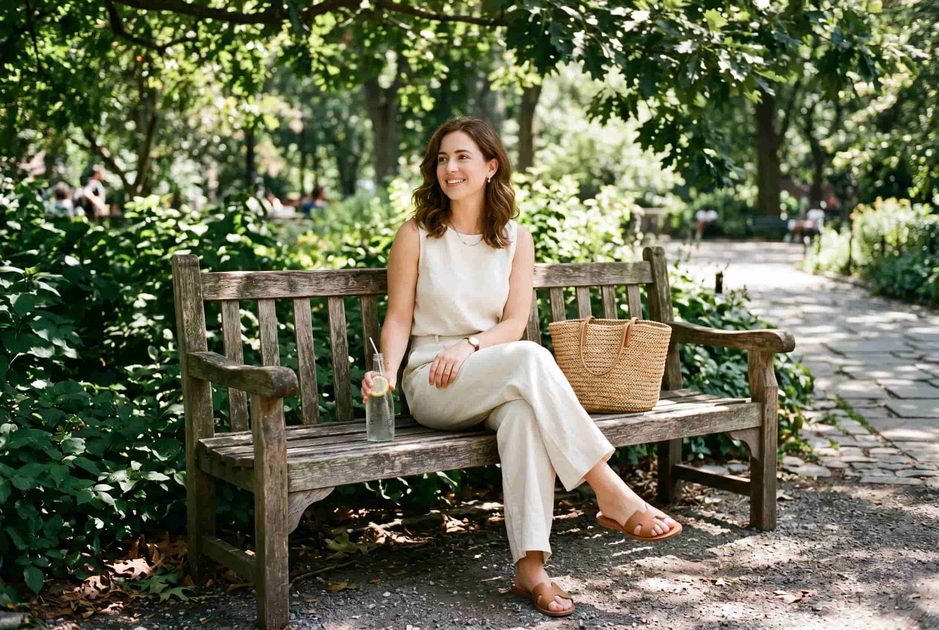
These three formulas have carried me through Austin summers, client trips, and vacation days alike. Each one prioritizes airflow and comfort while keeping things polished.
The Breezy Suit Formula
A matching linen-blend sleeveless top and wide-leg trouser set in cream, sand, or a soft stripe. Flat tan sandals. A structured straw or woven bag. This is the one-piece wonder of hot weather. It looks intentional and chic, but it feels like pajamas. When I want to look pulled together without a single extra thought, this is what I reach for.
The Dress-and-Slide Formula
A midi cotton dress in a solid neutral or a muted print. Flat leather slide sandals. A small crossbody bag. A thin chain necklace. This formula requires two pieces plus accessories and takes under a minute to put on. It works for brunches, errands, museum visits, and casual date nights. The key is the dress shape: it should have enough ease to move freely without being so oversized that it loses its shape.
The Elevated Tee-and-Trouser Formula
A lightweight cotton or linen tee in white or cream, tucked loosely into olive or sand wide-leg trousers. Tan or nude flat sandals. A canvas tote. This is my everyday uniform when the temperature climbs. It covers me for coffee meetings, market runs, and casual workdays. The trousers elevate the humble tee, and the whole outfit breathes from top to bottom.
The Details That Keep You Looking Polished in Heat
Heat tends to undo the small things. Makeup slides. Hair frizzes. Accessories feel heavy. But a few quick adjustments keep everything intact.
First, keep your hair off your neck. A low bun, a twisted knot, or a neat ponytail instantly cleans up your silhouette and keeps you cooler. Second, skip heavy foundation and let your skin breathe. A tinted moisturizer with SPF, a little concealer where needed, groomed brows, and a tinted lip balm create a fresh, intentional face without feeling heavy. Third, choose minimal, lightweight accessories. Small gold or silver hoops, a thin chain, and a simple watch feel elegant but do not add visual or physical weight.
Fourth, and this is a trick I used constantly on shoots, carry blotting papers or a clean tissue to gently press away shine on your forehead and nose. It takes ten seconds and refreshes your whole appearance. Fifth, check your hem and neckline before you walk out. In heat, clothes can shift. A quick adjustment in the mirror ensures nothing has twisted or drooped since you put it on.
The One Thing to Avoid at All Costs
If there is a single mistake I want to steer you away from, it is wearing clothes that are too tight. Heat and tight fabric are a miserable combination. The fabric sticks. The seams dig. You spend the whole day tugging and adjusting, and that physical discomfort reads on your face and in your posture. Even if a fitted piece looks good standing still in an air-conditioned room, it will likely betray you the moment you step into the sun. Choose ease. Choose air. Your body and your mood will thank you.
Final Thought: Hot weather is not an excuse to give up on style. It is an invitation to master the art of ease. Breathable fabrics, smart silhouettes, and a few cool accessories are all you need to stay polished when the temperature rises.


No notes yet — write the first one.