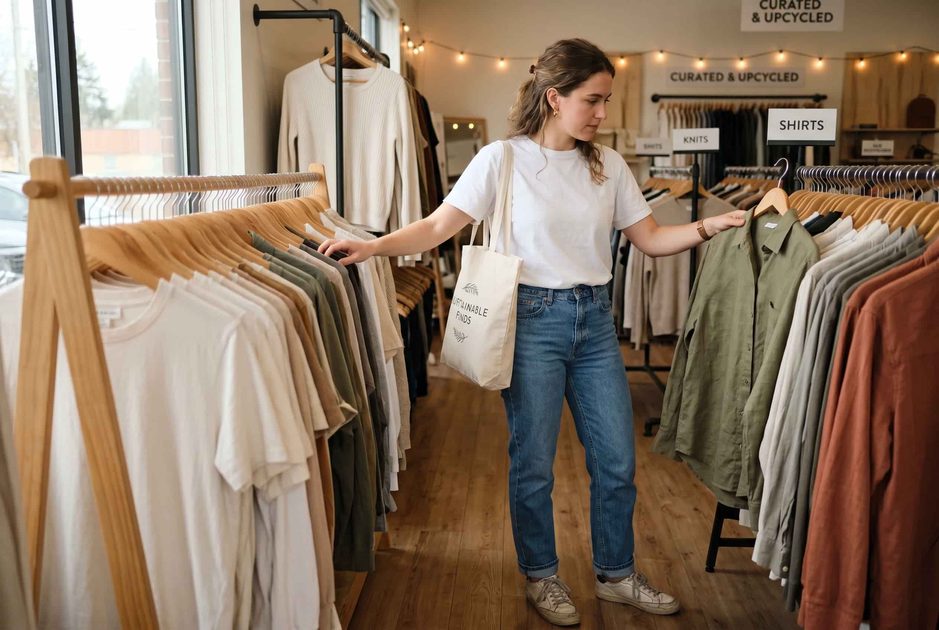
I have spent countless hours in thrift stores. Some of my favorite wardrobe pieces came from racks that most people walked right past. As a visual merchandiser, I learned to scan clothing quickly and spot quality from a distance. As an e-commerce stylist, I learned which pieces photograph well and hold up over time. And as a woman on a budget, I learned that thrifting is the single most underused tool for building a polished wardrobe without spending much money.
But thrifting can also be a time-waster if you walk in without a plan. Aimless browsing leads to a cart full of quirky pieces you never wear, or worse, an hour of your life gone with nothing to show for it. Here is the exact strategy I use to thrift for basics efficiently, so you can walk in, find the good stuff, and get out with pieces that earn their place in your closet.
The Mindset Shift That Makes Thrifting Work
Most women thrift the wrong way. They wander through every aisle, looking at every color, touching every fabric, and hoping something catches their eye. This is how you end up exhausted and empty-handed. The right way is to thrift like a stylist: with a specific hit list, a fast scanning method, and the willingness to leave with nothing if the right pieces are not there.
I treat thrift shopping exactly like I treated buying trips for e-commerce shoots. I have a short list of specific categories I am hunting for. I walk directly to those sections. I scan the racks by color and fabric first, not by individual garment. And I trust the fabric test completely. If a piece does not feel good in my hand, it goes back on the rack immediately, no matter how pretty it looks.
What to Look for First: The High-Reward Categories
Not every category is worth your time at a thrift store. Some items are almost always plentiful and high-quality. Others are almost always disappointing. Here is where I focus my energy.
Best Categories to Thrift | Why They Work | What to Avoid Thrifting |
|---|---|---|
Neutral knit sweaters in cotton, wool, or cashmere blends | Quality knits age beautifully and are easy to spot by touch. Look for heather grey, camel, oatmeal, and navy. | Graphic tees, which are often faded, stretched, or carry dated logos. |
Button-down shirts in cotton, linen, or silk | These are often donated barely worn. Check the collar, cuffs, and underarm area for wear. | T-shirts in white or cream, which often show stains, yellowing, or stretched necklines. |
Tailored trousers in wool, crepe, or cotton twill | Many women donate trousers that simply needed a hem adjustment. Look for matte finishes and clean waistbands. | Jeans, unless you have time to try on multiple pairs. Fit varies wildly and the process is slow. |
Blazers and structured jackets | Blazers are expensive new and often donated after minimal wear. Check shoulder seams and lining. | Trendy fast fashion pieces, which were low quality to begin with and rarely improve with age. |
Leather belts, bags, and shoes | Real leather and quality construction are easy to spot and often undervalued at thrift stores. | Swimwear, undergarments, and heavily worn shoes with molded footbeds. |
This priority list keeps me focused. I walk in, head straight to the knits and the trousers, and only browse other sections if I have extra time.
The Scanning Method I Use to Move Fast
I developed a scanning method during my visual merchandising days when I had to process racks of clothing quickly. It works just as well in a thrift store as it did in a stockroom.
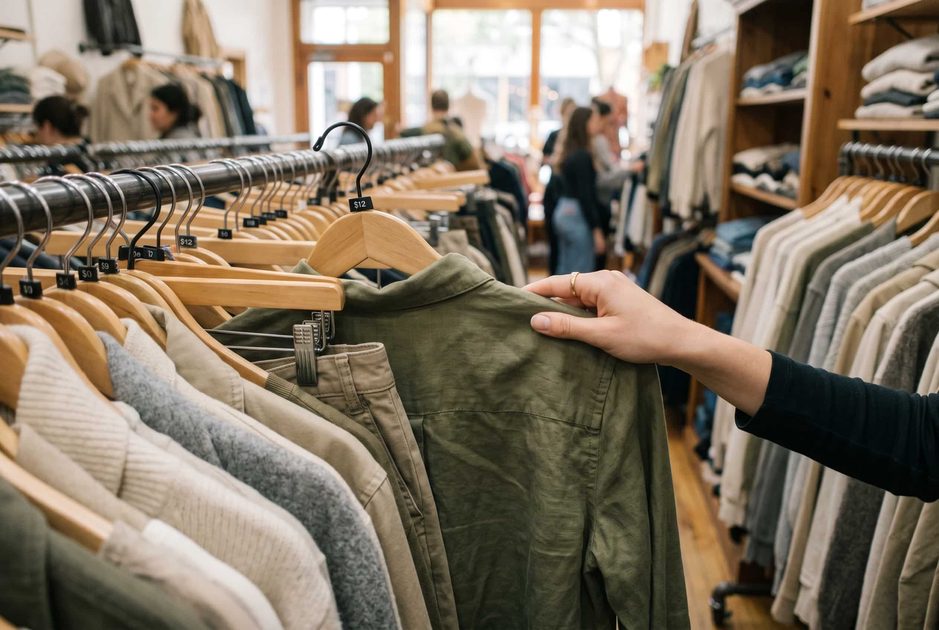
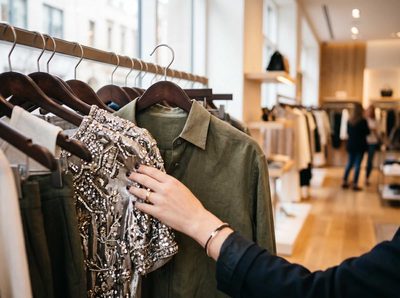
First, scan by color. Your eyes can pick up a swath of neutral tones much faster than they can read individual garment details. I look for cream, oatmeal, camel, olive, charcoal, navy, and soft black. If a section of the rack is full of neon pink and loud prints, I skip it entirely. Second, scan by fabric texture. Matte finishes, soft drapes, and natural fibers catch the light differently than shiny synthetics. My eyes know what to look for. Third, stop and touch only the pieces that pass the first two scans. This three-step process takes me through a full rack in under two minutes.
The Exact Basics Hit List I Bring to Every Thrift Store
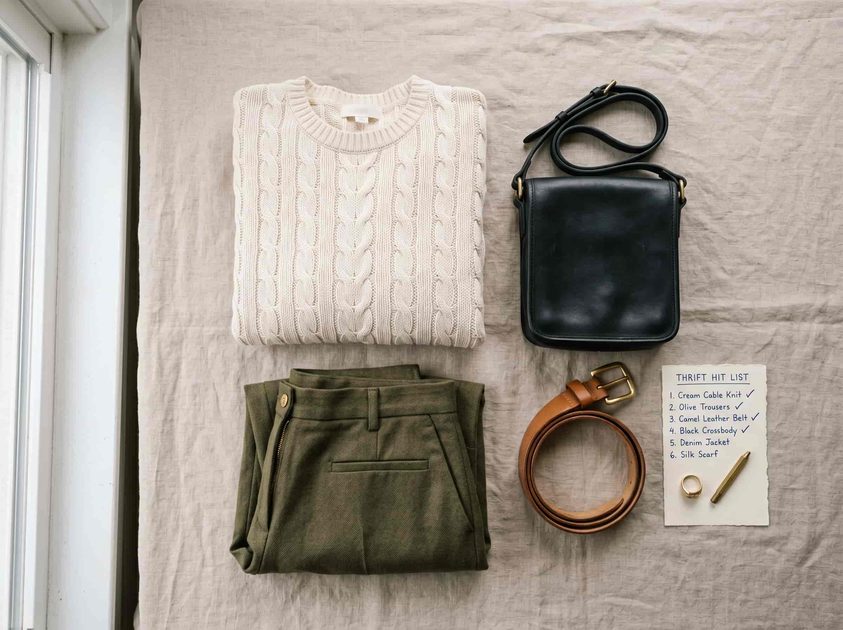
Over the years, I have refined a mental list of the specific basics that are worth hunting for in thrift stores because they appear consistently and deliver high value. Here is my exact hit list.
Crewneck and V-Neck Sweaters in Neutral Tones
The men's section is often a goldmine for quality knitwear in classic cuts. A men's medium or small in a fine-gauge merino or cotton sweater can fit beautifully on a woman's frame. Check the elbows and cuffs for thinning.
100% Cotton Button-Down Shirts
Look for crisp cotton with a bit of weight. Men's sections again offer excellent options here. A slightly oversized men's button-down, tucked or tied, is one of the most versatile basics you can own.
Wide-Leg or Straight-Leg Trousers
Focus on the fabric, not the label. A matte crepe or lightweight wool blend in olive, charcoal, or sand is a win at any price. Check the hem to see if there is extra fabric to let down or if the current length works for your height.
Structured Blazers
A good blazer from a quality brand can last decades. Look for a clean shoulder line, a lining that is intact, and buttons that are secure. Ignore the size tag. Try it on. Blazer sizing is inconsistent across decades and brands.
Leather Belts and Bags
A real leather belt with a simple buckle costs very little at a thrift store and lasts for years. A structured leather or suede bag in black, brown, or tan can look like a designer find if the shape is clean and the hardware is minimal.
Silk Scarves
This is a bonus category, but a silk scarf in a muted pattern or solid jewel tone adds polish to any outfit. Tied around a ponytail, a bag handle, or a neck, it is an affordable touch of elegance.
The Quick Quality Check I Do Before Buying
Every piece that makes it past my scan gets a five-second quality check before it goes in my cart. I check the seams by gently tugging along the stitching to see if it holds. I check the fabric under natural light near a window or doorway if possible, because store lighting hides stains and thinning. I check the underarm area on tops and the inner thigh on trousers for wear. I smell the garment. Odors that are not easily washable, such as heavy perfume or mildew, are a hard pass. And I ask myself the same question I ask when buying new: does this piece pair with at least three things I already own? If the answer is no, it stays on the rack.
What to Do When You Get Home
Thrifted pieces need a little care before they join your closet. Wash or dry-clean everything immediately. Steam or press items so you can see their true shape. Replace any tired buttons with simple new ones. This small effort is what transforms a thrift find into a polished staple. I keep a small tin of spare buttons from old garments specifically for this purpose.
Final Thought: Thrifting for basics is not about luck. It is about strategy. Walk in with a short list, scan fast, touch less, and only bring home the pieces that genuinely fit your wardrobe. Do this consistently, and you will build a closet full of quality staples for a fraction of what they cost new.
No notes yet — write the first one.