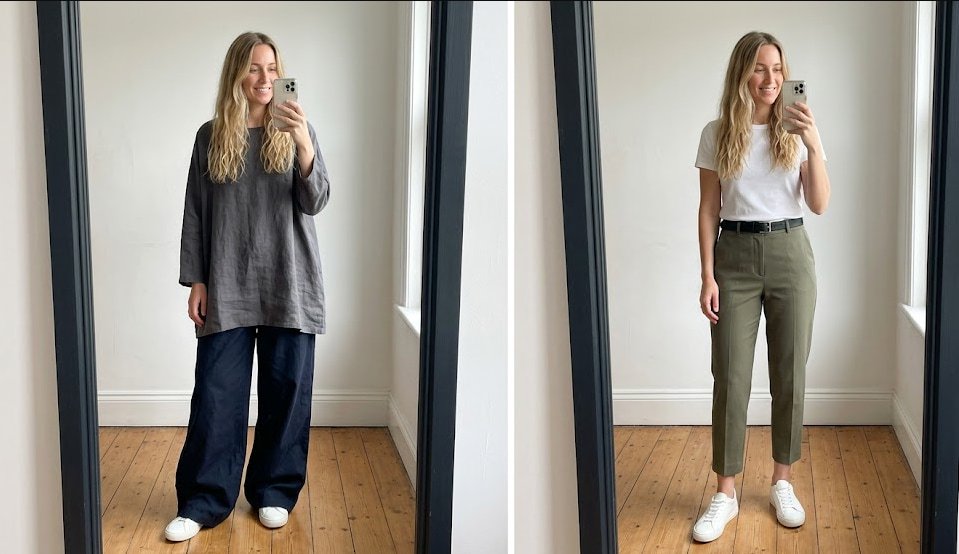
I spent years dressing mannequins and real women, and I can tell you the single most important thing I learned: most outfits fail before you even leave the house, and it has almost nothing to do with how much you spent. It has everything to do with proportion.
Proportion is the relationship between the pieces on your body and the shape they create together. Get it right, and a twenty-dollar thrift store outfit can look like it was tailored for you. Get it wrong, and even a designer jacket can make you look shorter, wider, or simply… off. And here is the frustrating part: most women feel that something is wrong but cannot name it. That ends today.
What Proportion Actually Means in Everyday Dressing
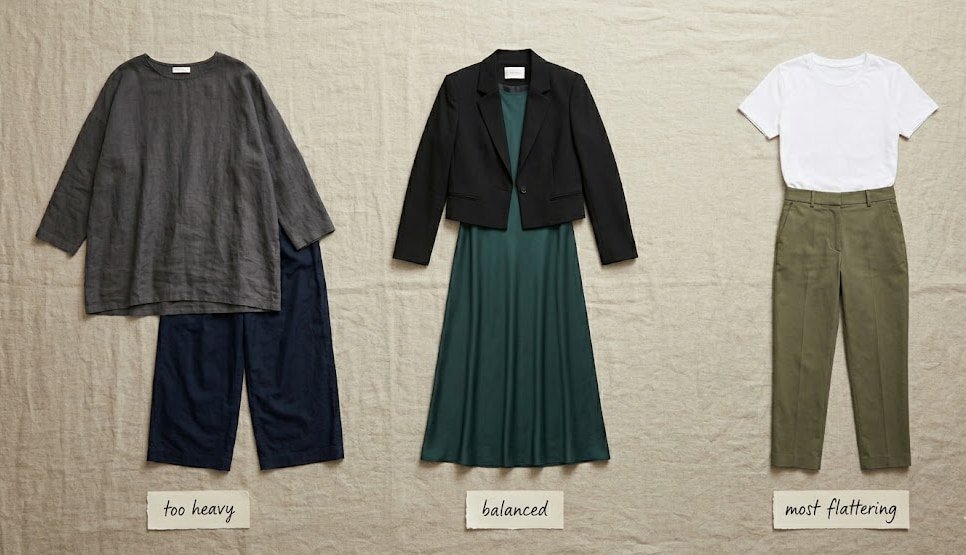
In visual merchandising, we obsess over the “third point.” A mannequin styled with a long tunic, skinny pants, and a short necklace creates a rhythm that the eye enjoys. Replace the skinny pants with wide, cropped trousers and the rhythm collapses into a block. The eye stops. The outfit feels heavy.
On a real body, proportion is about how lengths, volumes, and waistlines interact. The goal is not to follow a rigid rulebook but to understand which combinations elongate you and which ones cut you in half. And trust me, once you see it, you cannot unsee it.
The Three Proportion Mistakes I Fixed Most Often in E-Commerce Styling
I have dressed hundreds of women for product shoots where the clothes had to look good on screen and in real life. These three mistakes showed up again and again, regardless of body shape or budget.
The Mistake | Why It Fails | The Instant Fix |
|---|---|---|
Tunic tops worn over loose pants | Buries the waist and creates a single, shapeless block from shoulder to ankle. | Front-tuck the tunic, or swap the pants for a slimmer cut. Define a waistline somewhere. |
Long cardigans that end at the widest part of the hip | Cuts the body exactly where most women carry natural curve, adding visual width. | Choose a cardigan that hits mid-thigh or just below the knee, or go cropped to just above the hip. No stopping at the hip bone. |
Cropped pants with ankle straps or high-top shoes | Cuts the vertical line at the ankle, making legs look shorter. | Let the hem fall cleanly with a slight crop showing bare ankle, or wear a nude shoe that blends with your skin tone. |
These fixes cost exactly zero dollars. They are pure logic, and they work every single time.
Why Your Shirt Hem Is Making or Breaking Your Entire Silhouette
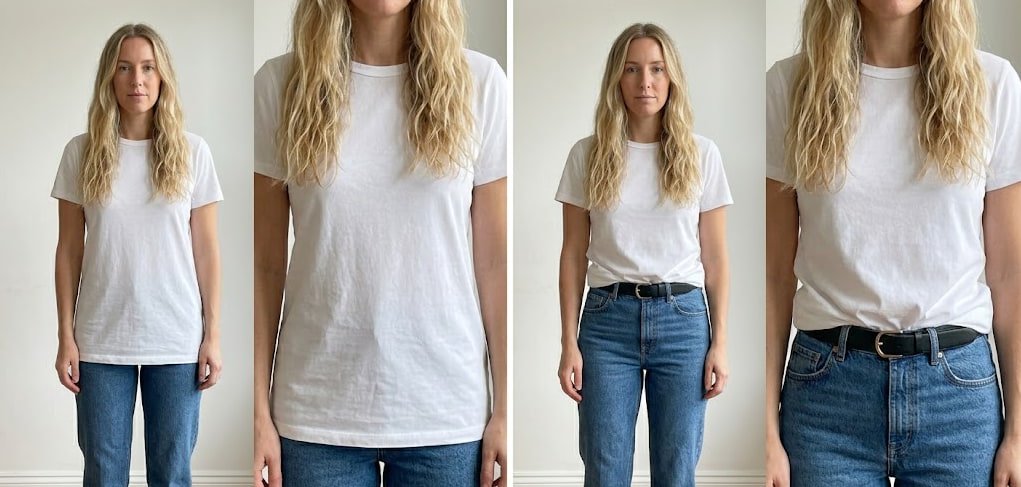
There is a reason front-tucking became a universal styling trick. When you leave a shirt untucked over pants or a skirt, the eye travels to the lowest point of the hem. If that point lands at the widest part of your hip, the eye stops there and widens you. If you lift that visual anchor by tucking the front just an inch or two, you shift the focal point upward to the smallest part of your waist.
This one move alone can change the entire proportion of an outfit. I have used it on size two models and size eighteen clients, and the effect is the same. It restores a natural shape without needing shapewear, belts, or anything uncomfortable.
The Simple Test I Used in My Styling Consultations
When I did freelance e-commerce styling, I had a quick mirror test I taught every client. I would have her stand straight facing the mirror, then put her hand over one eye and squint so the image blurred. In that blur, your outfit becomes a set of shapes and lines. If you see a clean vertical rectangle with a slightly defined middle, the proportion works. If you see a square, a triangle with a wide base, or two stacked blocks, the proportion is fighting you.
Try this tomorrow morning before you leave the house. It takes five seconds and will tell you more than any fashion magazine.
How Proportion Creates the Illusion of Height
You do not need heels to look taller. You need an unbroken vertical line. That is why monochrome outfits work so well. When your top and bottom are the same or similar shades, the eye travels down without interruption, and you instantly appear taller and leaner. Add a long cardigan or an open-front jacket in the same tonal family, and you extend that line even further.
I once styled a client who was five foot two and swore she could not wear flats. We put her in high-waisted trousers and a matching tank, with a long-line cream duster. She looked five foot six in flat sandals. Proportion, not heels, was the answer.
Apply This to Your Wardrobe Today
You can walk into your closet right now and fix most proportion problems without buying a thing. Find that top that always looks “weird” on you. Check where the hem falls. Try tucking it. Find the pants you love but never wear. Look at the length and ask yourself if a one-inch roll at the ankle would change the line. Look at your cardigans and jackets. Measure with your eye where they stop on your legs. If any of them cut you exactly at the widest point, try moving that line up or down by adjusting the hem, layering a longer piece, or simply knotting the fabric.
These are not magical hacks. They are the visual principles I used every day in retail to make clothes sell. And when you apply them to your own body, they make you look like you know exactly what you are doing. Because, now, you do.
Final Thought: You do not need a new body to look better in your clothes. You need to understand proportion. Once you do, almost everything you already own starts working harder for you.